PRERNA 1.0 and 2.0
The platform was conceptualised by the late Dr Maharaj Kishan Bhan to foster research collaborations amongst institutes working in maternal and child health and to nurture a pool of young investigators.
After a successful collaboration on the Rotovac project, SAS New Delhi, CMC Vellore and KEMHRC Pune came together again to establish PRERNA in November 2014, in association with the World Health Organization — each noted for policy-relevant research, strong leadership and a presence in local communities.
This enabled multi-centric expertise in epidemiology, clinical research, implementation science and community-based research across diverse geographic, socio-economic and epidemiological contexts.
The initial phases were led by Dr Nita Bhandari (SAS, New Delhi) and Dr Jose Martines (Former WHO) with Dr Sunita Taneja (SAS, New Delhi), Dr Gagandeep Kang (CMC, Vellore), and Dr Ashish Bavdekar and Dr Sanjay Juvekar (KEMHRC, Pune).

TAG – Technical Advisory Group
The programme was guided by a Technical Advisory Group (TAG )
with wide subject expertise and global representation.
The programme was guided by a Technical Advisory Group (TAG ) with wide subject expertise and global representation.
Original Technical Advisory Group

Dr Jose Martines
University of Bergen, Norway
Newborn and child health, nutrition, and implementation research
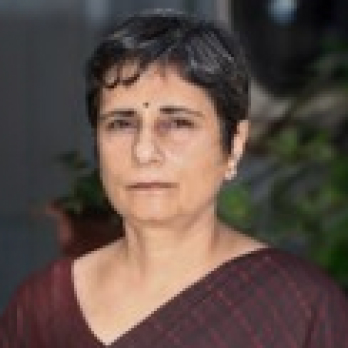
Dr Gagandeep Kang
Enterics, Diagnostics, Genomics and Epidemiology, Gates Foundation; Christian Medical College, Vellore, India
Vaccines and public health; enteric infectious diseases in children

Dr. Jayaprakash Muliyil
Christian Medical College, Vellore
Epidemiology and public health

Dr Anura Kurpad
St John’s Research Institute, Bengaluru
Human nutrition and metabolism, public health nutrition, stable isotope techniques

Dr Mark Tomlinson
Stellenbosch University, South Africa
Mental health and child development

Prof. Anurag Agrawal
Ashoka University, Delhi
Respiratory biology, health technology, digital health
Key achievements of PRERNA 1.0 and 2.0
Young Investigators Empowered
Manuscripts published in High Impact Journals
Enabled Collaboration for several pivotal studies
Organized Virtual Scientific Meetings
Conducted Workshops
By fostering collaboration across disciplines and leveraging collective infrastructure, expertise and community access, the PRERNA network provides a dedicated platform for:
Conceptualisation of innovative research ideas
Development of high-quality, policy-relevant research proposals
Multi-centric studies that address the diverse and evolving public health landscape in India
This collaborative model accelerates impactful research and strengthens India’s capacity to generate context-specific solutions to pressing public health issues.
Why PRERNA exists
To establish and sustain a collaborative research platform that facilitates high-quality interdisciplinary research addressing priority questions of national and global significance in maternal and child health.
Three Institutions

 New Delhi
Society for Applied Studies (SAS)
Nutritional epidemiology, early childhood growth and development, mental health and cognitive sciences, economic evaluation, implementation sciences.
 Vellore
Christian Medical College (CMC)
As a leading tertiary medical institute, it has access to a wide range of specialty and super-specialty departments.
 Pune
KEM Health Research Centre (KEMHRC)
Vaccine clinical research, including the design, implementation, and evaluation of regulatory vaccine studies; infectious disease epidemiology including community and hospital-based surveillance studies, anaemia and malnutrition, chronic respiratory disease, and implementation research.